Catherine Stine's IDEA CITY

Welcome Visitors

Tuesday, April 24, 2012

U for Unreliable Narrators

Today for A to Z, I'll talk about the literary term, Unreliable Narrator.
A unreliable narrator in a novel is a character who either has limited knowledge of facts or insight into himself and therefore spouts suspect ideas and "facts". It can also be a character who lies to himself or others, and takes shady paths of action. This is one of my favorite literary tools when creating characters! First of all, it makes the reader really have to think things through: is this character telling the truth? If not, why not? Or, in the case where the character is ignorant or lacking information, it allows the reader to be the smart guy, to have a laugh or two at the expense of the character! Readers like to be in the know, it's a fun logics game.

Are you still fuzzy about this concept? Let me give you some specific examples. A guy might be lying to himself about how much in love he is with a girl, but the reader knows differently through careful analysis of the text, and by how the guy is acting in a way that proves what he says is emotionally untrue. Or a criminal could be trying to verbally convince someone, even himself, of his innocence.
In the celebrated novel The Book Thief by Marcus Zusak, the narrator, literally Death is the quintessential "outsider". Death is an unreliable narrator in that he is opinionated and intentionally misleads people. He tries to make sense of the human condition, without ever having been human. Arguably the most famous unreliable narrator is Vladimir Nabokov's Humbert Humbert in the novel Lolita. Humbert's mind is so clever that he makes an almost convincing case that pedophilia is just fine. Of course, the reader knows better, and determines that Humbert is quite troubled. But the uncanny magic of using the unreliable narration tool, is that we can see the character's humanity--whether it be Humbert or Death itself--seeping through all of the warped layers.
Have you ever created an unreliable narrator? In what way was your character unreliable? Do you know of other great unreliable narrators in books?

Monday, April 23, 2012

T for Titling Your Novel

Today on A to Z it's all about the title. So, you've finished writing that fabulous novel and now you need to settle into a title for it. You wonder if there are any no-no's, or tips. I'll try to offer a couple of each.
I like the punch of a one-word title. BUT, and there is a big but... a one-word title may not be specific enough, in the sense that when someone Googles it, the Net comes up with many titles that include that word. For example, I titled my first YA Refugees. When I type it into Amazon, I get The Refugees by Arthur Conan Doyle, The State of the World's Refugees, by the UN Commissioner and Human Cargo and a Journey Among Refugees by C. Moorehead. (Even though my novel is awesome!) It's also a mistake to make the title long, because it's a mouthful and hard to remember. 

On the flip side, a medium-length title is great--say, three or four words. One that startles you and makes you think. Perhaps one that combines unusual concepts like Veronica Rossi's Under the Never Sky. It makes your synapses fire up. What IS a "never" sky? How can you even have a "never" sky??? Another great tip is to use a key line from your novel's text. For instance, in Sarah Dessen's novel about Remy, a girl falling in love with a musician like her dad who abandoned her, Dessen chose the title of a song that Remy's dad wrote for Remy that now haunts her: This Lullaby.

What is your best title? Why do you think it works?

Saturday, April 21, 2012

S is for Silly, Slaphappy Saturday!

Yow! Books were only 15 cents.
Today is S day on A to Z. It's just past the middle of the challenge, and like many of you, I'm a bit frazzled, but determined to complete the challenge. My theme is the Creative Life. What do creative heads do when they need a recharge? LAUGH! Laugh at really stupid, mindless, silly stuff. So, here's a fresh dose for everyone to laugh their way into the weekend. And there are a couple of redeeming children's books mixed in, including my sons' old favorite series, The Teacher From The Black Lagoon by Mike Thaler, and Captain Underpants by Dave Pilkey. Yee-haw!


What's your favorite silly book? Silly joke? Silly sign?

Friday, April 20, 2012

R is for Nancy Rawlinson, on Writing Workshops

Today, Nancy Rawlinson, one of my favorite writing workshop teachers will talk about what she's learned about teaching workshops over the years. Take it away, Nancy!

I think of writing workshops as being one of the crucibles of the writing life: they are a place where work is shared, critiqued, and forged anew. I've been in many workshops over the years, and teaching my own since 2006. At this point I have a good idea of what makes one work. I like to provide structure, because when everyone knows the rules and what’s expected of them, it provides the freedom and space for interesting work and talk to bloom. I also like to include a discussion of process in my groups, as often craft challenges are process challenges in disguise. I make sure that each work is honored and assessed according to its true nature – not what the readers in the group think it should be.

My workshops used to be exclusively for nonfiction writers, but then I ran a couple of fiction groups too. Now my workshops are cross genre, open to fiction and nonfiction writers alike. I love the cross pollination of ideas and approaches that occurs when writers with different genre perspectives talk about craft issues. The fiction writer asks: how can you bring in more omniscience to a memoir’s point of view? Is there such a thing as omniscience in memoir? The memoirist asks: what are the memories that this fictional scene is based on? How can they be further excavated? And we are off, into new and fertile territories.

And then, every now and again, a workshop experience can totally suck. I hope that none of the participants in my workshops ever feel that way, but I know I have been in some sucky groups. There was the one where a writer submitted thinly veiled caricatures of other people in the workshop. There was the one when every single submission was late, and two members of the group seemed as if they hadn’t even read the work. There was the one where a writer went off his meds and started barking like a seal and leaping up at random moments! Hopefully none of this will ever happen to you. If you're considering a workshop, here are my tips for how best to prepare yourself, and make sure that you are not the kind of member causing other people to grit their teeth.

* Decide before your first deadline, what work you will submit, and make sure it’s ready. You can change your mind last minute, but you’ll feel less stressed about submitting if you are prepared.

* Double space your work, use 12 point type, and ADD PAGE NUMBERS.

* Refrain from starting everything you say during a workshop discussion with the words: “If I were writing this piece…”

* No doodling on classmates' manuscripts – it doesn’t convey great consideration if the author finds a sketch of a deformed duck in the margins of that emotional scene in which the protagonist’s mother dies.

* Read your classmates’ work twice – once to capture your first impressions, and again, once the work has marinated in your mind, so that you can formulate deeper insights too.

* Never argue against feedback, even if you think that it is stupid, even if some of it wounds. Receive it with Zen equanimity, and say thank you. Anything that isn’t relevant, you will forget. Anything that sticks with you – even the negatives – is a spur to reinvention.

Thanks Nancy! Here's where she lives on the web. I'll leave you with a blurb from a happy client:

“Nancy did a thorough manuscript review of my novel. Her insights were highly astute, and her recommendations for revision revealed a deep insight not only into the book's technical weaknesses, but showed that she understood what I was trying to accomplish.  My subsequent revision is much, much better because of her help.”   -Helen W. Mallon (see Helen's short stories here)
A to Z link here.
What are your experiences in workshops? What do you feel is essential to make one work?

Thursday, April 19, 2012

Q is for Queens--Which one of These Fits Your Inner Queen?

Today for A to Z it's the letter Q. It's a natural for the word QUEEN. So many fun literary queens come to mind! The question is, which one fits your inner-queen for the day?
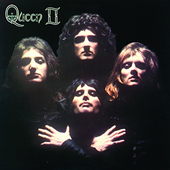
Queen!

Evil Queen in Snow White

Mary, Queen of Scotts

Queen Nzinga of Angola

The Red Queen

Queen Elizabeth

Drag Queen

Toy Queen

Queen Bee

Crowned kid

Wednesday, April 18, 2012

P is for Pieter van der Heyden, Engraver Extraordinaire


Merrymakers in an Oyster Shell
Pieter van der Heyden was a Flemish engraver, which is a form of line art etched into a sheet of metal, and then printed. He lived from 1530 to 1575. Bosch was a big influence on him, and a few works attributed to Bosch (who died in 1516) were actually engraved by van der Heyden. Talk about false attributions! I guess it was rampant in the 1500’s. Van der Heyden liked to create images based on proverbs, such as the one about big fish eating little fish, or his images of the seven vices (Anger, depicted here).

Anger, 1557
Van der Heyden is not to be confused with the Bruegel’s who were both painters.
Peter Bruegel the elder lived from 1525-1569
 Peter Bruegel the younger lived from 1564-1638
The Big Fish Eat the Little Fish, 1557

I will stop writing now, and let Van der Heyden's engravings speak for themselves!
Here's the A to Z link. Before you hop over to another blog, what do you think of these engravings? Engravings that teach some kind of proverb or lesson?


Tuesday, April 17, 2012

O is for Ocean, and Future Marine Technology

The first (and only) time I took a transatlantic cruise from New York to England, I was really scared. When I returned and showed a friend the photos I took, he laughed and said, "Do you have any photos of anything besides the porthole?" Indeed, I spent way too much time staring out of my bedroom porthole, convinced that the ocean liner had sprung a leak a la Titanic, and was sinking.

Ironically, I think my dread has most to do with my absolute respect and awe of the sea--its vast, liquid landscape and frigid depths. Its deep sea creatures with glowing tentacles and its life-giving seaweed rich in minerals and iodine.
Pelamis Wave Farm
The future will exist in large part, on the ocean. I'm convinced of it. My imagination caught fire when I pictured that future. MY YA thriller,  Fireseed One is set in 2089. It opens with a boy, Varik whose marine biologist father has drowned under mysterious circumstances. Varik has just inherited a vast ocean farm that he doesn't quite know what to do with. I made up hybrids that are part fish, part grape vines so that Varik and his farmhands could grow them up in floating warehouses. Other hybrids I created could eat up the floating toxins.

Vertical Farm Concept
In the real world, scientists and marine biologists have already started to invent the ocean technologies of the future. There are underwater tidal turbines and wave farms like the Pelamis Farm in Portugal that produces clean energy for 15,000 houses. There are plans for real ocean farms. Depicted here is one such vertical farm concept.
I'll leave you with some great websites that tell you more about them. Enjoy! And here's the A to Z link.
Web Ecoist talks about vertical sea farms
Nandu Green talks about tidal turbines
World Culture Pictorial talks about wave farms
What amazes you about the sea and its future possibilities?