Catherine Stine's IDEA CITY

Welcome Visitors
Showing posts with label writing tips. Show all posts

Monday, May 19, 2014

How I Found the Write Path blogfest, letters to a younger writer self

If you could write a confidential letter to your younger writer-self, helping ease the way forward or providing some important insights, what would you say? PK Hrezo and Carrie Butler have come up with a great idea: have authors write letters like these, create a How I Found the Write Path blogfest, and also an ebook anthology to help aspiring writers. Awesome, eh? Here's my letter to my nineteen-year-old self:

Dear scared younger author self,

I know you’re eager to write but terrified of spending so much time alone in a room creating stories. You think it might even drive you over the edge. I know
Me at 19
you feel you have much to offer but are shaky because you have no road map to go by, and no mentors yet. You’re brimming with stories, yet unsure of whether to keep doing your drawing and painting, which you were always praised for, or try this writing thing, which no one expected at all.


Let me be your mentor, after the fact. Others will talk with expertise about their amazing business plans, their early credentials. What I can do is clue you in on two extremely helpful things I learned: to trust in my gut instinct and to build community. People aren’t meant to do it alone. Not even writers. Yes, we sit alone in our writing studios and tap out our tales. True, unless you write for TV you don’t write by committee.

Find and build community. There are a myriad of helpful communities to tap into. First of all, I have my writer’s group, a trusted group of fellow authors who workshop each other’s manuscripts. This group provides a sense of joy, camaraderie, confidence and direction—and savvy revise notes! I also belong to a writer’s space. There, I hear others tapping away on their keyboards, which spurs me on. I can take breaks from work and chat in the cafĂ© area. Participation in member readings is another perk of being in this community.

Then, there’s my team of publishers. I’m a hybrid author. This means big and small publishers have published me, and I’ve indie published. The traditional team consists of an editor, publicist, and agent. The indie team is not that different, except that I get to hire the experts I want—to custom create my team. So, find your perfect publishing community and don’t settle for less. 

Then, there’s the book blogging community. You need these good folks to review your books, and to spread word. Giving back is essential. I frequently promote authors on my blog. I’ve even partnered with like-minded authors in a group blog. We cross-promote and discuss issues, successes and trade questions. Alone, but never really alone after all!

So, decide what you need in community. Then find and build it, and make sure to give back to it. Take your time to find the right ones. This brings me to the second important lesson I’ve learned. 

Follow your gut instincts! I was too shaky when I started, to live by this adage. I put certain writers, editors and agents on pedestals. I had people I barely even knew, much less trusted, reading and critiquing my manuscripts. I did too many changes, according to this or that random comment, without asking myself what I thought. What I truly felt deep down. Ultimately, a writer must listen to his or her gut. Without this prescient instinct as a rudder you can easily drift off your path.

Case in point: the first time I followed my gut on a serious professional level was when a big publishing firm (Random House) offered me a chance to revise one of my early novels on spec. I was still months away from graduating an MFA creative writing program, thus I was hugely flattered and excited by the possibility of being offered a contract. At a meeting with the senior editor and VIP of the company, no less, they ran down items they wanted me to do in a revision. But then they started to disagree with each other, and even to argue over how I should end my novel! (Refugees)


My studio table with my Chinese
good luck dragon, my grandma's
glass shoe, a glass cardinal
and a vintage beer stein
(Baubles help me think!)
Needless to say, I was frozen in fear, and barely managed to scratch out notes. I shook their hands, and ran out. Not only did I disagree with one of them, I vehemently disagreed with both of them on how to end my novel. I consternated, and meditated on it for days. And then, something clicked inside. I knew I had to go with my gut instinct, and keep the ending I wanted, while making other tweaks that I did agree with. I sent the manuscript back, literally quaking. 

When I got a call two weeks later that they were offering me a contract, I felt deeply relieved . . . and vindicated! That was the beginning of always making sure I followed my gut. 

So, good luck, be brave and celebrate being alone in your studio. Your characters will keep you company, plus all of the wonderful people in your writing community and mentors that you’ll find on your way. You have your sixth sense to guide you.
(Carrie and PK, I say yes to inclusion in the anthology :) )

Here's the link to read other writers' posts. But before you hop away, how would you answer this?
What one piece of advice would you have loved to give your younger writer self?

Monday, May 12, 2014

The Writing Process, What's Yours?

Today I'll focus on my writing process, part of a craft thread that the talented Donna Galanti invited me to be a part of. A bit about Donna:

She writes suspense, YA, and middle grade fiction and is represented by Bill Contardi of Brandt & Hochman Literary. She's an International Thriller Writers Debut Author of the paranormal suspense novel A HUMAN ELEMENT (Echelon). Watch for her suspense novel A HIDDEN ELEMENT, the sequel to A HUMAN ELEMENT, coming summer 2014 by Imajin. Her middle grade series, JOSHUA AND THE LIGHTNING ROAD, debuts in 2015 by Month9Books.

Her writing process question made me wonder what is my writing process exactly?

The Cape porch where I started to
write Fireseed One, Ruby's Fire
and Model Position
I tend to start projects in the beginning of the summer, often at the writing retreat I go to at the Cape, where I can get totally lost in daydreams. It takes me around six months to do a first draft, though I've done them faster: once for an American Girl project in a month (!!!) and another during Nanowrimo (61K words in a month). I'm trying to fast draft now, but it doesn't always work, because I'm the type of writer who needs to know where the plot is going first. Yes, I outline, but not in too much detail.
I work on one novel draft a time, though once in a while I'm revising one project, while drafting another. I get into my characters quite deeply, so it can get confusing to write two first drafts at once.
I've written middle grade lit, A Girl's Best Friend, a ghostwritten novel and a story called the Fashion Show for a Scholastic book club anthology. More recently, I've written YA: Refugees, Fireseed One, Ruby's Fire. And I'm continuing to write YA. I've also really gotten into writing new adult: Model Position, and the continuation of that storyline in my forthcoming novel, Private Internship. I love writing new adult, because the boundaries of what can be portrayed are pretty boundless. I like boundless.
And I like romance. We'll see where my journey takes me!

Taking a poll. What should I work on next? Book 3 of Sienna's artistic journey or
a historical romance set in the 30s?

And now, I'm happy to introduce the two writers who I've selected to talk about their writing journeys for their own posts on May 21.

The first author is Helen Mallon, who writes contemporary fiction that straddles the line between literary and women's fiction (if you had to categorize it, which she may give me a sharp elbow nudge for doing). Her writing truly impresses me: her wordcraft and character portrayals are masterful. And she's got a brand new bundle of stories coming out!

The second is Elizabeth Arroyo, a wonderful author of paranormal and romantic fiction. Her dark fantasy series The Second Sign and The Second Shadow are real rollercoaster rides.

So make sure to check out their posts on Wednesday, May 21!

What's one hallmark aspect of your writing process?

Wednesday, August 14, 2013

Indie Life--Confidence, that Crucial Element, plus Ruby Tour Continues

Today for Indie Life, sponsored by the fabulous Indelibles, and which posts once a month, I’m talking about confidence. About moving forward with authority, without doubting oneself, and how I developed this… skill, really, over the years. As an indie author, one needs a sense of sureness. Yes, we all have trusted colleagues that we run big decisions by. That said, anyone in the arts must have a strong sense of intuitive intelligence about their own work. Is it well written? Is the characterization true enough? Is the piece done?

In my former career, as an artist, specifically as a painter who showed work in galleries in Manhattan, I had that in spades. I was raised to be an artist, expected to be an artist, and I always had that gut strength that I knew what I was doing, where I fit in, in terms of genre, whether what a random gallerist said was BS or not. I sent my slides around everywhere, and landed great shows. I also got rejected from some galleries, but it slid off my back because intuitively I knew that opinion is subjective, and part of the process. I rarely took it personally. Tearing myself away from a fairly lucrative career where I sold work and got reviewed in good art magazines was like tearing out part of my heart and sewing up the gash with crude rawhide. But I needed to move on to my second love: writing!

Fast forward to my present career as a novelist. When I started to send out manuscripts I didn’t have that same sense of sureness. When editors pointed out flaws in story I was devastated. I asked for direction from way too many writers—some who were not good mentors. It’s taken me years to reach that place of authority—trusting in my gut, knowing whether a piece is solid without having to ask dozens of people.

But I took those lessons from my art career along inside me, and I did rely on my previous learning experiences to talk myself through rejections, through periods of insecurity. It helped me immensely. Of course, your latest novel often seems like your truest love--perfection. But I can really say, with the completion of Ruby’s Fire, my new YA fantasy, that I’ve reached that point of intuitive authority that I had as an artist—knowing it’s good no matter what anyone says, knowing that I’ve created deep, amazing characters and crazy plot twists. I remember how it felt to have that inherent sense of knowing, and it’s a relief to feel it again. I know I’ll have future moments of insecurity, but I’ll think back to my art career, and remember those life lessons. Oh, and Ruby and Fireseed contain my interior illustrations, so I've been able to blend my two careers!

The Ruby’s Fire Tour continues 'til week's end. Here are the hosts for today, Thursday and Friday (Links go live on the day of). Stop by and say hi! For the entire lineup click here. Enter the Rafflecopter below for big prizes. Here's the link to read more Indie Life posts.
What helps give you confidence as an author?

August 14
Fae Books: Guest post: What Inspires me to Write?

August 15

August 16
Marked by Books: Sneak Peeks & BONUS mini-review!
a Rafflecopter giveaway

Tuesday, April 3, 2012

C for CONTINUITY

Today for A to Z, it's C Day.  C is for CONTINUITY. The dictionary describes this as: 1. uninterrupted connection, succession or union. 2. a continuous or connected whole 3. a film, musical piece, or story in chronological order. From the Middle English (1375-1425) continuite --flow or progression.

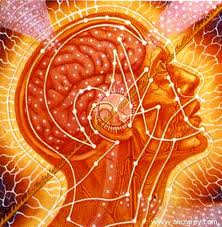
As a writer and teacher of fiction, I am very aware of the importance of maintaining continuity. I often write on workshop students' pieces "Give us more connective tissue." What do I mean by that? Perhaps a novel is too episodic, and the episodes don't connect enough, or perhaps the characters are each going on their own paths and not bouncing off each other in a tight action/reaction dance. Or the main protag's challenge has little to do with the theme of the story.
Alex Grey, Visionary Art

Think of a body. It has a heart--the story core--and it has parts that each do their duty. In a body, without connective tissue, the muscle that holds the body together, or lymph that pushes out toxins, or the blood that feeds and oxygenates, the parts would loosen and fall apart. The main characters' wants and needs should weave together in a complex design, and the story should have a clear, arching trajectory.

Think continuity!

What do you think is important in pulling a story together as one whole?

Sunday, November 28, 2010

Nanowrimo Finish Line: The Sprint to 50K word count


I did it! 50K+ word count. I’m a Nano winner! I didn’t give up. I only had a couple of really low word count days (and a lot of angst), but now I have a good part of a working draft. Halleluiah! As the amazing fantasy writer, Holly Black reminded folks who were slowing down and doubting themselves during that difficult 3rd week: “Right now you are not writing a good book, you are writing a good draft.” Or as Chris Baty, who started Nano in 1999 reminded folks who were experiencing a sluggish mid-point in their draft: “Incite change… juice it up by inflicting some major changes on your characters. Crash the spaceship. End the marriage. Buy the monkey!” Or, a last piece of advice from super-sage, Tamora Pierce: "Set characters in motion, even if it's just to higher ground. You learn something, you can tell us something, by how people deal with with something that requires them to assemble themselves and move from their comfort zone."

These words of wisdom from nano peptalkers helped free me up to continue barreling ahead without obsessively editing, or poring over material from the day before. My Nano writing buddies helped spur me on too. Thanks, all! One of the few things that suffered, was my blog posting. But now that December is here, I will post more frequently. Promise.

What I learned from Nano:

I can actually write before noon!
Disaster won’t ensue if I let the laundry pile sky high
My family will be fine without daily home-cooked meals
If I write every day, I keep the story thread quite fresh
I do not need to obsessively edit each chapter as I go.
I can do a live write-as long as it’s not in Starbucks, with music blasting
There’s a huge adrenaline rush in banging out a draft so fast

And the best part? My “you-did-it" gift is a trip to China!

What’s your Nano experience? The most important thing you learned? The funniest thing you discovered? The hardest struggle? Your most proud moment? Your post-Nano gift to yourself?

Wednesday, November 10, 2010

Nano food, Nano diversions, and Name Your Inner Editor


What do you feed yourself when you’re trying to keep up your strength for Nano (National Novel Writing Month), basically writing each day until you keel over your laptop, in an exhausted haze?
I’m eating fish. Brain food. I had langostinos last night for dinner. What the heck are they, you ask? A crustacean sometimes called the Squat Lobster that lives in the waters of Chile and Spain. My hubby made langostino pasta. Mmmm. Today, I had sardines for lunch, in my salad, and tonight I’ll dine on Salmon teriyaki takeout. My brain will be fully charged from all of that omega-rich fish, but I fear possible mercury overdose a la Jeremy Piven. Perhaps I should switch to spinach and collards. A plain old mineral-rush.

Many writers are probably binging on junk food: fries, ice cream, Twinkies. You heard about that guy on the news who lived on Twinkies for a couple of weeks and still lost weight. It’s all about the calories, he determined. Don’t use that as a rationalization for self-medicating your wobbly confidence this Nano season or your stomach will rebel, and you’ll lose a few precious word-count days.

On another note, Erin F, the NYC Nano moderator posted about her inner editor. She named hers, Ethel, I want to say? I think I’ll name mine too. David. (My inner-editor is a “him”—a father figure from childhood, who paid close attention to details?? My muse is male too, so figure that one out, Dr. Freud!). Problem is, I’ll have to give my inner-editor more than one name. You see, David, has a few sides to him. When I’m sailing along he’s mellow too, so I’d call him Dave. But when I’m stumbling and the writing’s messy, my inner editor rails on me to go back and edit the darn mess. I reason with him, remind him that I’m not ALLOWED to go back and edit during Nano. He snaps, “But you’re writing’s sloppy, full of gaping holes and spelling errors.” That guy I wouldn't call David or Dave. I’d call him Mr. Thang.

Finally, the fabulous Aimee Bender, author of Willful Creatures, and Nano’s pep-talker of the day, encouraged writers to deviate from their outlines. She told us to follow our Nano daydreams, the playful questions percolating in our heads. In her words: “If you are writing a grocery scene, let’s say, and, if, on aisle 4 of the grocery store, character 1 starts to open up a peanut butter jar and eat it, and character 2 is so irritated she goes to flirt with a guy on aisle 3, and if this scene was supposed to be their first kiss—well? Maybe it's just not their first kiss at all. Maybe the guy on aisle 3 will end up being incredibly important!” Follow the scene to an unexpected place in the way you normally would NOT, in a tight outlined piece. I’ve learned to outline. I have to, to avoid wasting huge amounts of time as I spin a story into the outer rings of Saturn. BUT, now may be a great time for me to deviate—to noodle—to play—to take a dialog to an unintentional place. I’ll allow myself that liberty, in between scenes.

What about you? Special Nano foods? Your inner editor’s name? Your bravest deviation from the norm? Spill it here!